- We are Certified by ISO 9001:2015 & ISO 14001:2015
SCADA (Supervisory Control and Data Acquisition) is a centralized architecture comprising hardware (sensors, PLCs, RTUs, Meters) and software used to monitor and control industrial processes and power in real time. It collects operational data from remote equipment, power meters, processes it at a central station, and presents it on graphical interfaces for operators to supervise and control.
A solar SCADA system provides granular, two-way communication that allows operators to manage various subsystems from a central HMI (Human-Machine Interface):
Operators can remotely start, stop, or reset inverters. More importantly, they can adjust real-time parameters such as active and reactive power set-points to comply with utility grid curtailment requests or voltage stabilization requirements.
For plants with solar trackers, SCADA can send “Stow” commands to position panels parallel to the ground during high-wind events to prevent structural damage. It also monitors for “stuck” motors by comparing set-point angles with actual physical angles.
SCADA manages circuit breakers and motorized switches at the substation. It ensures the plant’s output is synchronized with the grid frequency and voltage before connection.
Advanced systems can trigger automatic actions, such as starting a backup generator if production drops below a threshold or disconnecting segments during detected electrical faults.
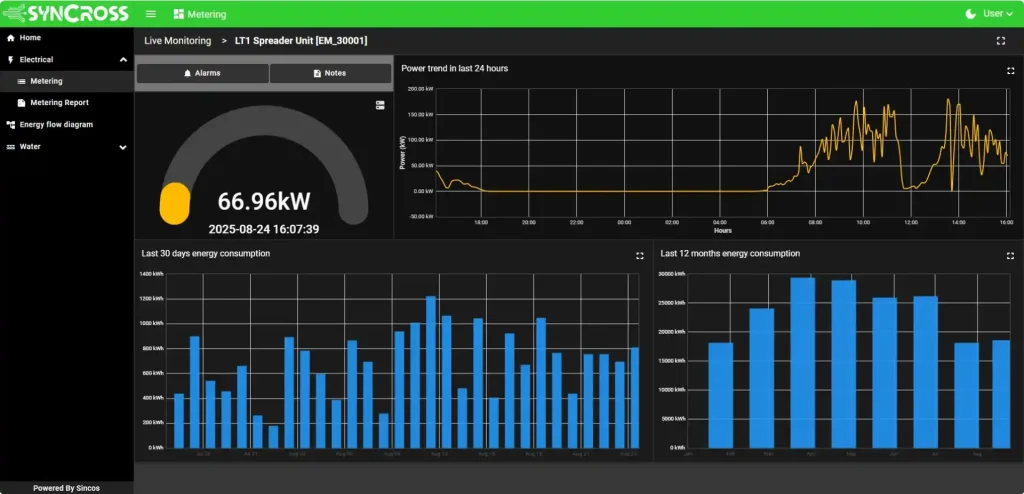
Implementing a robust SCADA system has a direct, measurable impact on the plant’s financial and operational health:
Early fault detection (e.g., a single failed string among thousands) can reduce generation losses by up to 2%.
Real-time alerts can reduce response times for critical alarms from 45 minutes to under 10 minutes.
Remote resets and diagnostics reduce “truck rolls” (dispatching technicians to the site) by identifying issues that can be fixed from the control room.
Predictive maintenance identifies underperforming components before they fail, extending the lifespan of inverters and transformers.
Accurate data logging helps in warranty claims against manufacturers by providing historical proof of equipment underperformance.
A site might experience a “tripped feeder” on a Friday, and the owner might not discover the loss until Saturday. This downtime results in significant lost revenue.
The operator sees the alarm instantly on a Saturday, performs a remote reset in minutes, and restores power production immediately.
At Sincos Green Tech Ltd, we don’t just install solar panels; we build intelligent energy ecosystems. As a premier provider of industrial automation, we specialize in deploying Siemens-powered SCADA systems that offer unparalleled control and visibility over your renewable energy assets.
We leverage the global gold standard in automation—Siemens SIMATIC WinCC and S7-1500/1200 PLCs—to ensure your solar plant operates with military-grade reliability.
We build intuitive, localized dashboards that allow your operators to visualize energy trends, inverter status, and weather data at a glance.
Our systems are engineered to handle the complex synchronization required for grid-tie systems, ensuring 100% compliance with local utility standards.
Using Siemens’ “Defense-in-Depth” concept, we protect your solar plant from unauthorized access and external cyber threats.
Sincos can bridge your site data to the cloud using Siemens Platform, allowing you to monitor your plant performance from anywhere in the world.
